
In today’s fast-paced life, health has become one of our most valuable assets. Rising medical costs, lifestyle diseases, and unexpected emergencies make health insurance not just a choice, but a necessity. A single hospitalisation can drain years of savings, but a good health insurance policy protects you and your family from such financial shocks.
What Is Health Insurance?
Health insurance is a contract between you and an insurance company where the insurer covers your medical expenses in exchange for a regular premium. These expenses may include hospitalisation costs, doctor fees, medicines, diagnostic tests, and sometimes even pre- and post-hospitalisation expenses.
Why Health Insurance Is Important
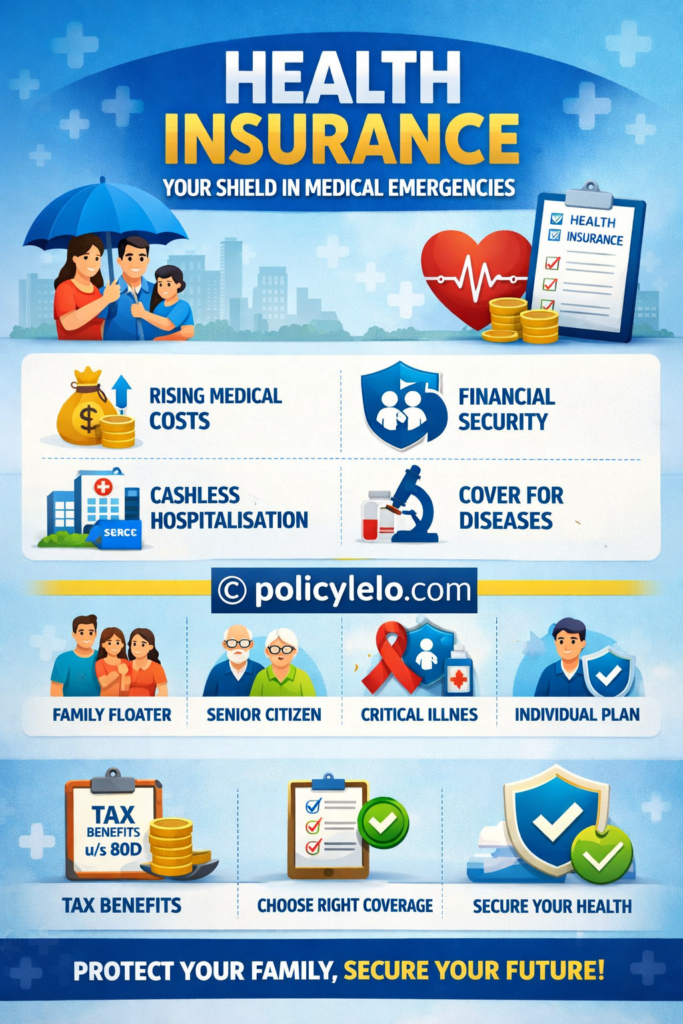
1. Rising Medical Costs
Medical inflation in India is increasing every year. Treatments that once cost ₹50,000 now easily cross ₹2–3 lakhs. Health insurance ensures you get quality treatment without worrying about money.
2. Financial Security
Health emergencies are unpredictable. A health insurance policy protects your savings and prevents you from taking loans or selling assets during critical times.
3. Cashless Treatment
Most insurers provide cashless treatment at network hospitals. This means the insurance company directly settles the bill with the hospital, reducing stress for patients and families.
4. Coverage for Lifestyle Diseases
Diseases like diabetes, hypertension, heart problems, and cancer are becoming common. Health insurance helps manage long-term treatment costs effectively.
5. Tax Benefits
Premiums paid for health insurance are eligible for tax deductions under Section 80D of the Income Tax Act, providing additional financial relief.
Types of Health Insurance Plans
Individual Health Insurance
Covers one person and is suitable for individuals without dependents.
Family Floater Plan
A single policy that covers the entire family under one sum insured. It is cost-effective and ideal for families.
Senior Citizen Health Insurance
Designed specifically for people above 60 years, offering coverage for age-related illnesses.
Critical Illness Insurance
Provides a lump-sum payout on diagnosis of serious illnesses like cancer, heart attack, or stroke.
Group Health Insurance
Offered by employers to employees, usually at a lower cost.
How to Choose the Right Health Insurance Plan
- Sum Insured: Choose adequate coverage considering your city, lifestyle, and medical inflation.
- Network Hospitals: Ensure good hospitals near you are included.
- Waiting Period: Check waiting periods for pre-existing diseases.
- Claim Settlement Ratio: Higher ratio means better claim reliability.
- Policy Inclusions & Exclusions: Read the fine print carefully.
Common Mistakes to Avoid
- Buying insufficient coverage to save premium
- Ignoring policy exclusions
- Relying only on employer-provided insurance
- Not renewing the policy on time
Conclusion
Health insurance is an investment in your peace of mind. It ensures timely medical care, financial stability, and security for your loved ones. Buying health insurance early not only reduces premium costs but also gives you wider coverage with fewer restrictions.
In a world full of uncertainties, health insurance is your financial safety net. Choose wisely, stay protected, and focus on what truly matters—your health.